
Functional Skills: Rounding and Estimating
Rounding Numbers
Rounding is a way of changing a number to make it easier to write and work with, even though it may be less exact. Rounding can be done to a number of decimal places (d.p.) or to the nearest whole number, or nearest 10, etc.
If you round numbers too early during a calculation, then the final answer may be wrong, so only round at the end of a calculation, unless the question specifically asks you to round before.
There are 5 skills you need to learn in this topic.
Make sure you are happy with the following topics before continuing.

Skill 1: Rounding to a Number of Decimal Places
Example: Round to decimal places.
Step 1: Find the digit you are rounding to. In this case it is the nd digit after the decimal point.
Step 2: If the number to the right is below , we round down and it stays the same. If it is or more, we round up and increase it by .
is bigger than , so the increases by to
Step 3: Don’t write down and digits after this. What is remaining is the final answer, which is
Follow Our Socials


Follow our Facebook for community support



Follow our Instagram & TikTok for revision help
Our Facebook page can put you in touch with other students of your course for revision and community support. Alternatively, you can find us on Instagram or TikTok where we're always sharing revision tips for all our courses.
Follow our socials for revision tips and community support
Skill 2: Rounding to the Nearest Whole Number
Example: Round to the nearest whole number.
Step 1: Find the digit you are rounding to. In this case it is the first digit before the decimal point, since we are rounding to the nearest whole number.
Step 2: If the number to the right is below , we round down and it stays the same. If it is or more, we round up and increase it by .
is smaller than , so the stays the same.
Step 3: Don’t write down any digits after this, including the decimal point. What is remaining is the final answer, which is

Skill 3: Rounding to the Nearest 10
Example: Round to the nearest ten.
Step 1: The first digit, , is in the hundreds column, but the second digit, , is in the tens column, so this is the digit we are rounding to.
Step 2: If the number to the right is below , we round down and it stays the same. If it is or more, we round up and increase it by .
is or more, so the is increased by to .
Step 3: Finally, change all of the digits after this to ‘s. What it remaining is the final answer, which is
Skill 4: Rounding to the Nearest 100
Example: Round to the nearest hundred.
Step 1: The first digit, , is in the thousands column, but the second digit, , is in the hundreds column, so this is the digit we are rounding to.
Step 2: If the number to the right is below , we round down and it stays the same. If it is or more, we round up and increase it by .
is or more, so the is increased by to .
Step 3: Finally, change all of the digits after this to ‘s. What it remaining is the final answer, which is
Note: We use similar techniques to round to the nearest , , etc.
Skill 5: Estimating
Answers to calculations can be estimated by rounding the numbers in them to the nearest whole number, or nearest , etc. This can be used to check your calculations are correct or estimate the answer without a calculator.
Example: Stevie sells some items on an auction website.
She sells a TV for , a microwave for and a hairdryer for
Estimate how much money Stevie makes from selling these items.
Since the value of the items are all in the tens or hundreds, it would be better to round them all to the nearest .
rounds to
rounds to
rounds to
So, in total she makes
Notes:
- If the digit you are rounding is a , you have to round it up to and add to the digit to the left.
- Usually, you will not be told what to round the numbers to when you are estimating – you just need to use your common sense. However, there is normally not a right or wrong answer when estimating – you will be given leeway.
Functional Skills: Rounding and Estimating Example Questions
Question 1: Round to decimal places.
[1 mark]
Here, we are rounding to decimal places, so look at the rd digit after the decimal point, which is the first .
(the second one) is bigger than , so the first is rounded up and is added.
However, this makes , so we need to change this to and carry the to the left and add it to that column.
Don’t write down any digits after this.
So,
rounded to decimal places is
Question 2: Round to the nearest thousand.
[1 mark]
Here, we are rounding to the nearest thousand, so look at the rd digit, which is the .
is smaller than , so we round down and the stays the same.
Make the rest of the digits after this zero.
So,
rounded to the nearest thousand is
Question 3: Round to the nearest whole number.
[1 mark]
Here, we are rounding to the nearest whole number, so look at the st digit before the decimal point, which is the .
is bigger than , so we round up and the increases by to .
Do not write down any digits after this, including the decimal point.
So,
rounded to the nearest whole number is
Question 4: Mr Singh runs a triathlon made up of three sections. He completes the first section in minutes, the second section in minutes and the third section in minutes.
Estimate how long it takes Mr Singh to complete the triathlon, in minutes.
[1 mark]
Since the times of each section are all in the tens, it would be better to round them all to the nearest .
rounds to
rounds to
rounds to
So, in total he completes the triathlon in
minutes
Question 5: The surface area of a sphere is given by the formula , where is the surface area and is the radius of the circle.
Estimate the surface area of a sphere, in cm, where and cm.
[2 marks]
Since the numbers are in the units, we should round them both to the nearest whole number.
rounds to
rounds to
So, the surface area of the sphere is
cm
Specification Points Covered
EL3.5 – Approximate by rounding numbers less than 1000 to the nearest 10 or 100 and use this rounded answer to check results
L1.12 – Approximate by rounding to a whole number or to one or two decimal places
L1.15 – Estimate answers to calculations using fractions and decimals
L2.2 – Carry out calculations with numbers up to one million including strategies to check answers including estimation and approximation
L2.9 – Order, approximate and compare decimals
Functional Skills: Rounding and Estimating Worksheet and Example Questions

Rounding and Estimating EL3
Entry Level 3NewOfficial PFS
Rounding and Estimating L1, L2
FS Level 1FS Level 2NewOfficial PFSRevision Products
Functional Skills Maths Level 2 Book
Revise and practice for your functional skills maths level 2 exam. All topics covered in this compact functional skills maths revision guide book.
Functional Skills Maths Level 2 Mini Tests
Practice for your functional skills Maths level 2, questions from every topic included.
Functional Skills Maths Level 2 Revision Cards
Revise for functional skills maths level 2 easily and whenever and wherever you need. Covering all the topics, with revision, questions and answers for every topic.
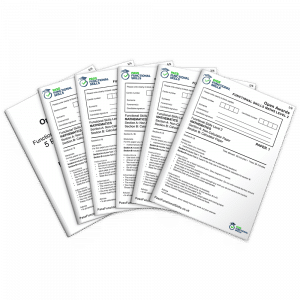
Functional Skills Maths Level 2 Practice Papers
This 5 set of Functional Skills Maths Level 2 practice papers are a great way to revise for your Functional Skills Maths Level 2 exam. These practice papers have been specially tailored to match the format, structure, and question types used by each of the main exam boards for functional skills Maths. Each of the 5 papers also comes with a comprehensive mark scheme, so you can see how well you did, and identify areas to improve on.
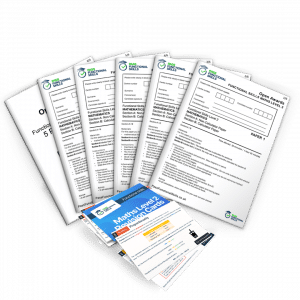
Functional Skills Maths Level 2 Practice Papers & Revision Cards
This great value bundle enables you to get 5 functional skills maths level 2 practice papers along with the increasingly popular flashcard set that covers the level 2 content in quick fire format.