
Functional Skills: Numbers and Place Value
Numbers and Place Value
Numbers can be split up into columns, called digits. Place value is about the value of each digit within a number. Each digit has a different value determined by its position in the number.

Place Value
The value of each digit decreases, going from left to right. Each digit in the number has a different value, e.g. the means . The value for each digit added together makes the number.
To read or write a large number, break up the number into groups of three digits starting from the right, using commas if we wish.
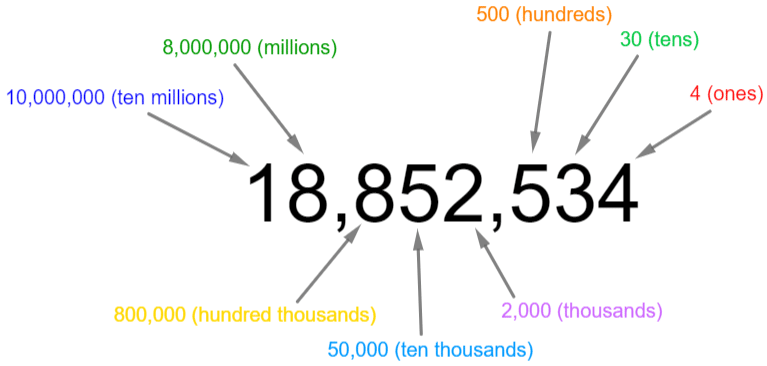
We then have a millions group, a thousands group and the rest. Therefore, this number can be spoken in words as
million, thousand, hundred and
or
eighteen million, eight hundred and fifty-two thousand, five hundred and thirty-four
Follow Our Socials


Follow our Facebook for community support



Follow our Instagram & TikTok for revision help
Our Facebook page can put you in touch with other students of your course for revision and community support. Alternatively, you can find us on Instagram or TikTok where we're always sharing revision tips for all our courses.
Follow our socials for revision tips and community support
Positive and Negative Numbers
Numbers can either be positive, if they are greater than , or negative, if they are less than .
Number lines can help you visualise certain number problems, for instance they are really helpful in allowing you to grasp the concept of negative numbers. They can also be useful to find the difference between two numbers.
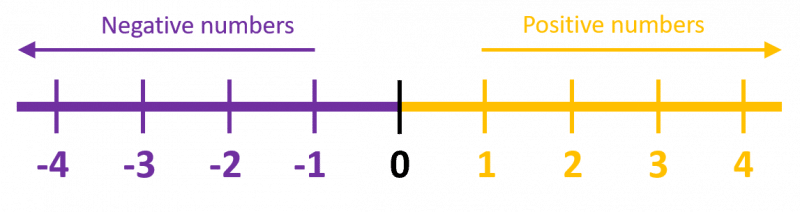
The further right you go on the number line, the larger the numbers become, e.g. is larger than which is larger than

Scales
Scales are just number lines that are often used in real life scenarios, for example a thermometer.
Sometimes they don’t always show every number and just increase in intervals.
The ruler below is an example of a scale, used to measure lengths.


Example 1: Place Value
State the place value of the in .
[1 mark]
Counting from right to left, we can see that the is in the third column along – the hundreds column.
Therefore, the value of the ‘ digit’ in this number is .
Example 2: Positive and Negative Numbers
Which number is larger, or ?
[1 mark]
Because both of these numbers are negative, so the number which is larger is the one with a smaller number after the minus sign, which is
Example 3: Number Line
The temperature at night was C, and then the temperature in the daytime was C.
Work out the difference between the temperature at night and in the daytime.
[1 mark]
First draw a number line that includes both and .
Then count on from to .

As shown on the number line above, there area steps, so the difference is C.
Example 4: Scales
Elise is measuring the height of a box, using a centimetre ruler.
What is the height of the box?
[1 mark]
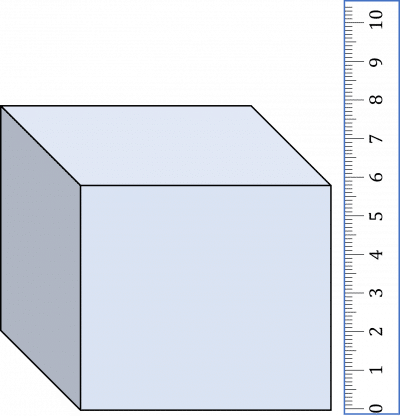
Each small line between whole numbers is worth cm, and the height of the box is lines between and , so the height of the box is cm.

Functional Skills: Numbers and Place Value Example Questions
Question 1: What is the value of the in ?
[1 mark]
The is the rd digit from the right, meaning it’s in the hundreds column. So, the value is,
or
Question 2: What is the value of the in ?
[1 mark]
The is the th digit from the right, meaning it’s in the hundred thousands column. So, the value is,
or
Question 3: How is the number spoken in words?
[1 mark]
Split the number into groups of three, starting from the right. So we have a thousands group and the rest.
is therefore spoken as
or
Question 4: How is the number fifty-three thousand, one hundred and four written in numbers?
[1 mark]
These can then be added together to make the number:
Question 5: Which number is smaller, or ?
[1 mark]
Because both of these numbers are negative, so the number which is smaller is the one with a larger number after the minus sign, which is
Question 6: Use a number line to find the difference between and .
[1 mark]

As shown by the number line above, there are steps between and , so the difference is .
Question 7: The thermometer below shows the temperature of some water in C.

What temperature is the water?
[1 mark]
We can see that the temperature is halfway between C and C. So the temperature of the water is C.
Specification Points Covered
L1.1 – Read, write, order and compare large numbers (up to one million)
L1.2 – Recognise and use positive and negative numbers
L2.1 – Read, write, order and compare positive and negative numbers of any size
Functional Skills: Numbers and Place Value Worksheet and Example Questions

Numbers and Place Value L1
FS Level 1NewOfficial PFS
Numbers and Place Value L2
FS Level 2NewOfficial PFSRevision Products
Functional Skills Maths Level 2 Book
Revise and practice for your functional skills maths level 2 exam. All topics covered in this compact functional skills maths revision guide book.
Functional Skills Maths Level 2 Mini Tests
Practice for your functional skills Maths level 2, questions from every topic included.
Functional Skills Maths Level 2 Revision Cards
Revise for functional skills maths level 2 easily and whenever and wherever you need. Covering all the topics, with revision, questions and answers for every topic.
Functional Skills Maths Level 2 Practice Papers
This 5 set of Functional Skills Maths Level 2 practice papers are a great way to revise for your Functional Skills Maths Level 2 exam. These practice papers have been specially tailored to match the format, structure, and question types used by each of the main exam boards for functional skills Maths. Each of the 5 papers also comes with a comprehensive mark scheme, so you can see how well you did, and identify areas to improve on.

Functional Skills Maths Level 2 Practice Papers & Revision Cards
This great value bundle enables you to get 5 functional skills maths level 2 practice papers along with the increasingly popular flashcard set that covers the level 2 content in quick fire format.