
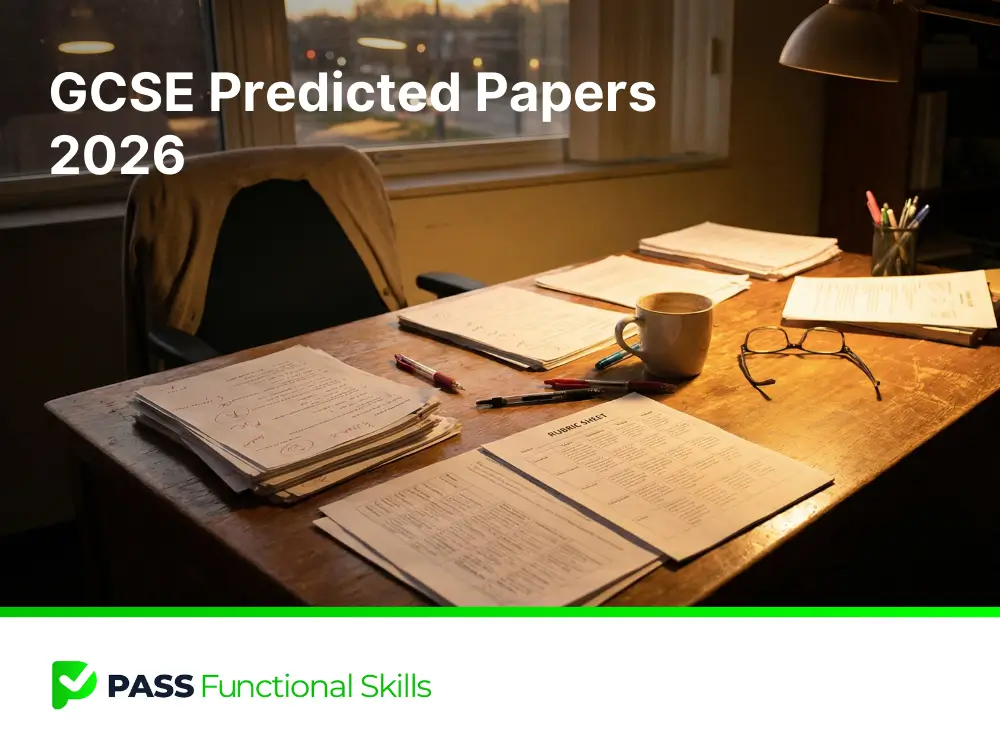
GCSE Predicted Papers 2026

What Are Predicted Papers?
GCSE predicted papers 2026 are a type of revision resource. They are mock-ups of exam papers, often by subject experts, that include lots of different question types on topics within the relevant specification. Students use them to practice their exam technique and test their content knowledge as part of their GCSE revision .
Some of the most popular predicted papers 2026 are:
GCSE Maths Predicted Papers 2026
GCSE English Language Predicted Papers 2026
GCSE English Literature Predicted Papers 2026
GCSE Predicted Papers Helpline: 020 3633 5145
How Do They Know What Questions Will Be in the 2026 GCSE Exams?
It is important to remember that GCSE predicted papers are not made by exam boards themselves, and they are not a cheat code – no one except the exam boards know which questions will be in your GCSE exams. Nobody can make predicted papers that are anything more than an educated guess, and companies that purport this may be advertising falsely. When looking for GCSE online predicted papers, it is advisable to avoid any company that is claiming that their resources are likely to include the real exam questions.
If you are revising for your GCSE Science exams, you can use:
GCSE Combined Science Predicted Papers 2026
GCSE Combined Triple Predicted Papers 2026
How Can GCSE Predicted Papers Help Me?
These full exam papers with exam-style questions can be a great revision resource. Completing predicted papers and past papers helps students improve their exam technique and therefore overall confidence. Official examination environments can be stressful and this is partly due to the unfamiliarity of the situation. Taking GCSE predicted papers at home in simulated exam conditions is a fantastic way to get used to working in these conditions, take some of the nerves out of exam day, and therefore improve performance! Good GCSE predicted paper questions should be in the style of the exam board, giving students the opportunity to familiarise themselves with different formats, and learn what each question wants from them/ what skills they need to demonstrate to get the marks.
With mark schemes included, students can mark their attempts themselves and thus identify any topic areas that need more attention – a good revision tip is to always start with the areas you are less confident on/where there is more room to improve. It can be tempting to revise the topics you know best, but any topic can come up in your exam and you should prepare for all circumstances.
For GCSE Science revision specific to each subject see:
GCSE Biology Predicted Papers 2026
GCSE Chemistry Predicted Papers 2026
GCSE Physics Predicted Papers 2026
How To Use GCSE Predicted Papers 2026?
- Test yourself in timed conditions to get used to pacing; you can use the total number of marks and the duration to calculate how many marks per minute will be expected.
- Attempt the exam papers blind (without any notes). This is active recall, one of the most effective revision techniques.
- Mark using the mark scheme and identify topics that you dropped marks on. Prioritise these for further attention. Also identify any question types that you didn’t understand, and try to practise these more.
- Don’t use them as content revision – just because a topic is not in the predicted paper, does not mean it won’t be in the real thing. Always base your revision on the exam board’s specification, for example the GCSE Combined Science OCR spec.
GCSE Predicted Paper 2026 FAQs:
What’s the difference between predicted papers and past papers?
Predicted papers are made by third parties. They tend to be in the same format as past papers for that subject and exam board. There is no guarantee that they are accurate for the 2026 exams – it is just experts making their best guesses. Past papers were made by the exam boards for previous sittings, and so include the questions that cohorts before you had to answer on their exam day. It is extremely unlikely that those exact questions will be in the 2026 exams, but the exam-styles and overall layout is likely to be replicated.
Do exam boards release predicted papers?
No, exam boards do not release predicted papers. The papers exam boards make are the real things, the content of which is kept secret to ensure fairness across all candidates. You can use the English Language Edexcel spec to see which topics could come up in your English GCSE exam, for example.
Where can I find predicted papers?
You can find GCSE predicted papers 2026 online. Providers like MME have lots of different revision resources, including GCSE predicted papers for 2026 with original content that you cannot find elsewhere. Each predicted paper from MME is designed specifically for one of the major exam boards, meaning you can practise exam-style questions that reflect how your real exam will work. For example, GCSE Maths 2026 predicted papers can help you get used to the layout of your maths exam.
GCSE Helpline: 020 3633 5145
Can I get GCSE predicted papers printed off?
Yes. You can get GCSE predicted papers for 2026 delivered in an A4 booklet, exactly like the real exam. Mark schemes are included so that you can easily see where you have gone wrong.
What should I look for in a GCSE predicted paper?
Look for predicted papers from respectable revision resource providers. Papers should be exam-board-specific, with both content and exam-format made specifically for that exam board. The content should follow the specification, and the best websites should offer other resources such as flashcards and revision guides too. Make sure they are not claiming to have the real questions – they don’t, and might be trying to scam you.

Pass Functional Skills Team
We help thousands of students each year with revision, courses and online exams.

Speak to one of our experts now
Our Functional Skills Experts are on hand to answer any queries you may have.